Bianca Patterson · 8 November 2026
Council Funds Square Project to Draw Regional Creators into Linguistic Shifts and Heritage Mixed-Media Art
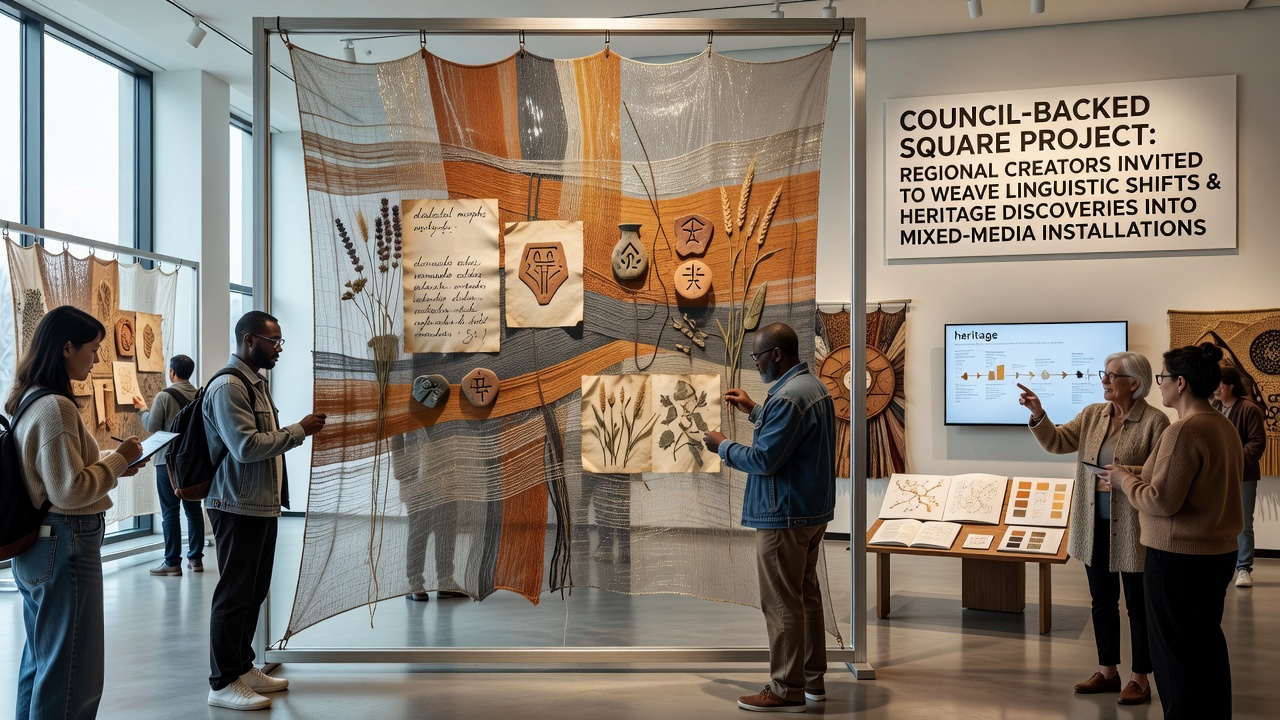
Regional authorities have launched a council-backed square project that extends formal invitations to local creators, asking them to integrate documented linguistic shifts alongside heritage discoveries into mixed-media installations across designated public spaces, and this initiative builds on existing records of language evolution tracked by academic linguists over recent decades while incorporating artifacts and oral histories unearthed in municipal surveys conducted since 2022.
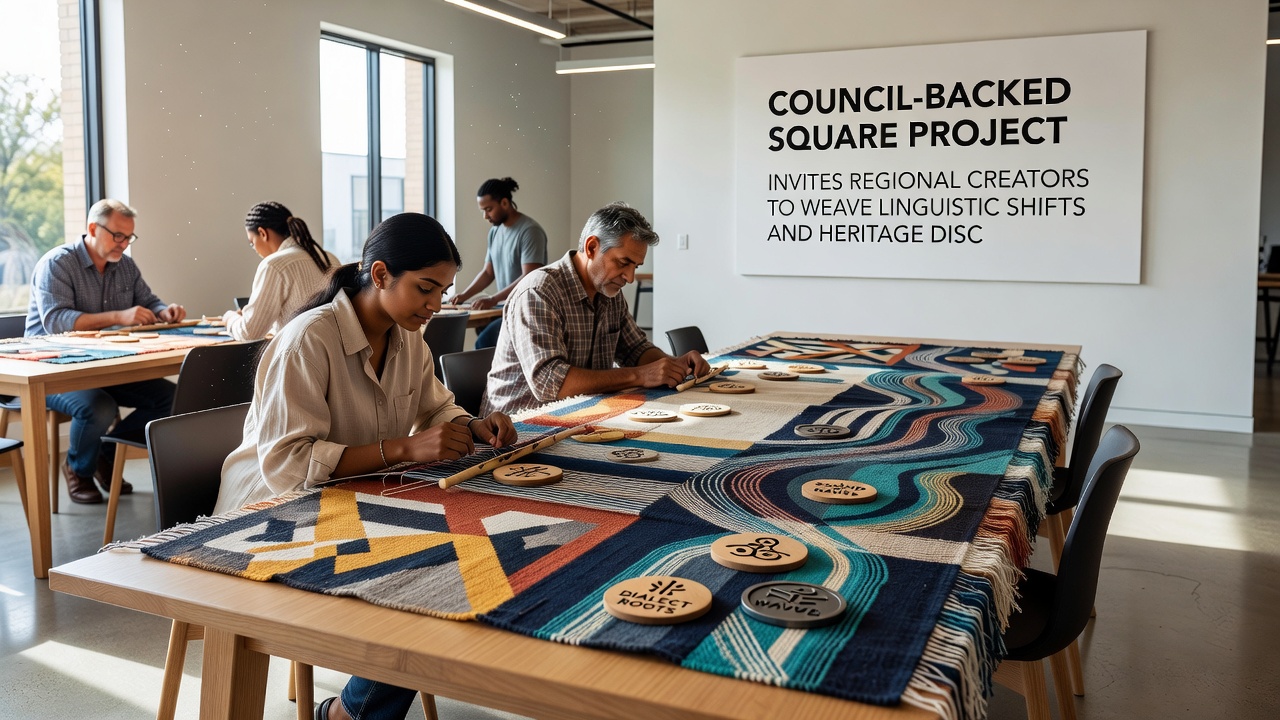
Project coordinators released application guidelines in early 2025, setting a submission window that runs through November 2026 for proposals detailing how artists will combine audio recordings of dialect variations with physical relics such as vintage farming tools and handwritten letters, and these guidelines specify that selected installations must occupy at least four zones within the central square to ensure visitors encounter layered narratives during routine foot traffic.
Project Structure and Creator Selection Process
Organizers divided the square into thematic quadrants where one area focuses on phonetic changes in regional speech patterns recorded between 1950 and 2020, another highlights archaeological finds from 19th-century settlements, while remaining sections allow for cross-media fusions that merge soundscapes with projected imagery of evolving place names, and selection panels composed of council representatives plus independent curators review submissions on criteria that include technical feasibility and alignment with verified historical data rather than artistic interpretation alone.
Funding allocations total 185000 euros distributed across twelve chosen proposals according to the council budget report released last quarter, and each recipient gains access to technical support teams that handle installation logistics including weatherproofing for outdoor displays and integration with existing lighting infrastructure.
Integration of Linguistic Data and Heritage Elements
Creators receive access to digitized archives maintained by the regional university linguistics department, where researchers compiled over 1400 hours of spoken-word samples illustrating vowel shifts and vocabulary replacements tied to migration waves, and these datasets pair with physical heritage items catalogued by the municipal museum such as pottery shards and textile fragments that bear inscriptions reflecting earlier language forms.
One approved concept pairs interactive touch panels displaying animated maps of dialect boundaries with embedded fragments of recovered correspondence, while another proposal incorporates wind-activated chimes tuned to frequencies derived from recorded intonation patterns alongside laser-etched maps of former trade routes, and both approaches rely on sensor technology supplied through partnerships with local engineering firms.
Timeline and Public Engagement Milestones
Installation phases commence in March 2026 after final selections occur in February, with full public access scheduled for the November 2026 cultural festival that coincides with the council's annual heritage week, and during this period visitors can participate in guided tours that explain the data sources behind each piece without requiring prior registration.
Attendance projections from the events office estimate 25000 participants across the festival weekend based on figures from the previous edition, and digital tracking tools will log dwell times at each installation to inform future iterations of the project.
Related Research and Broader Context
Studies compiled by the European Heritage Network indicate that similar mixed-media approaches in other municipalities have increased public interaction with linguistic archives by measurable margins, and data from the National Endowment for the Arts shows comparable programs in North American cities achieved sustained visitor engagement when heritage objects appeared alongside evolving language representations. National Endowment for the Arts reports further detail how such integrations support educational outreach without altering source materials.
Additional context appears in documentation from Canadian Heritage, which tracks parallel efforts linking indigenous language records with material culture in public installations across multiple provinces. Canadian Heritage archives provide templates for community consultation protocols that the current square project adopted during its planning stage.
Conclusion
The council-backed square project continues its rollout with creator submissions accumulating ahead of the November 2026 deadline, and final installations will remain in place for a minimum of eighteen months to allow longitudinal observation of visitor responses alongside continued collection of linguistic and heritage data for archival purposes.