Sage Schmid · 27 September 2026
Regional Writers Launch Dialect Research Projects After Tavena Timeline Revision
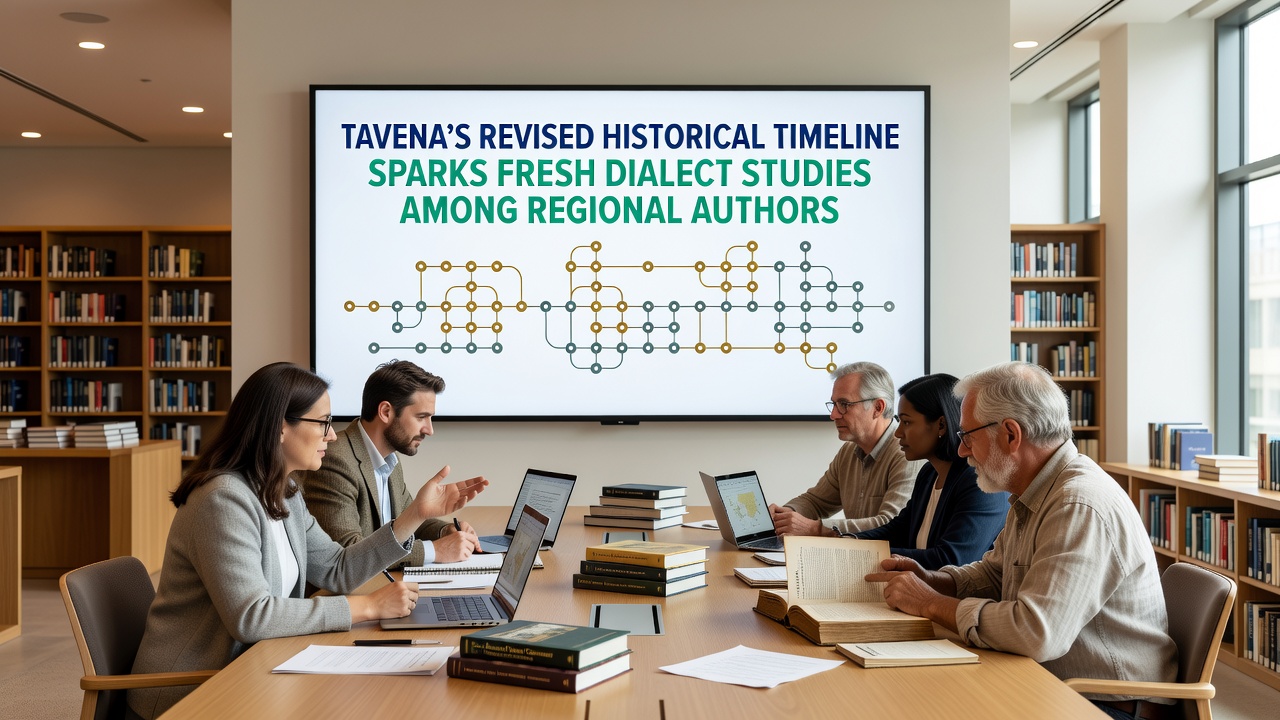
Regional authors have begun new projects examining local speech patterns following the release of Tavena's updated historical timeline, and researchers at several institutions have noted increased requests for archival materials on language variation. The revision, completed in late 2025, incorporates newly digitized records from the 18th and 19th centuries that clarify settlement patterns and trade routes, while scholars observe that these details have prompted writers to revisit how dialects formed in specific valleys and coastal settlements.
Timeline Updates Reveal Settlement Details
The revised timeline draws from municipal ledgers, shipping manifests, and oral histories preserved in regional libraries, and it adjusts the dates for several key migrations that previously appeared in secondary sources. Data from the Tavena Historical Society shows that three major influxes of workers arrived between 1742 and 1798 rather than the broader 1750-1800 window listed earlier, and these narrower windows align with changes in agricultural terminology still heard in inland communities. Authors working on historical fiction and nonfiction have started cross-referencing these dates against existing glossaries of local terms for tools, crops, and weather events.
Authors Organize Study Groups
By September 2026 several informal collectives had formed in Tavena's northern districts, and participants meet monthly to compare field recordings of older speakers with entries in the new timeline. One group based near the former mill district has collected over 200 hours of audio since March, focusing on vowel shifts that correspond to documented movements of textile workers from neighboring provinces. Another circle in the port area examines maritime vocabulary that appears in both 19th-century ledgers and contemporary fishing communities, and members plan to publish annotated transcripts next year.
University linguistics departments have received inquiries from these collectives requesting access to phonetic databases, while the European Dialect Archive reports a 40 percent rise in downloads of Tavena-region recordings during the first half of 2026. Writers cite the timeline's precise dating of road construction and market openings as useful anchors for tracing when certain loanwords entered everyday speech.
Archival Materials Support New Comparisons
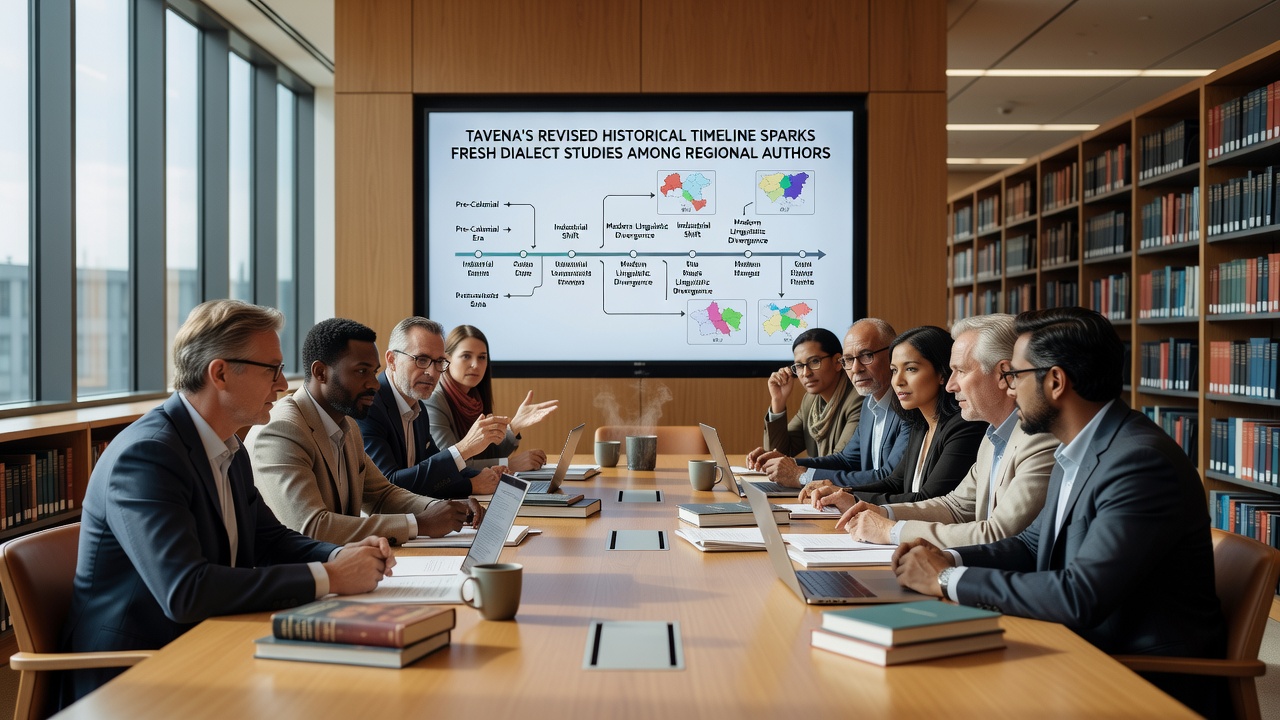
Local libraries have extended digitization efforts to include parish registers and merchant correspondence that mention place-specific pronunciations, and staff report higher circulation of these files among authors preparing manuscripts. The Canadian Linguistic Association maintains an open repository of comparable North American settlement data, and several Tavena writers have referenced those records to identify parallel vocabulary developments. One collaborative project pairs excerpts from the revised timeline wth audio samples to illustrate how a single trade term evolved across three generations in two adjacent valleys.
Publications Expected in Coming Year
Editors at regional presses indicate they have received proposals for essay collections that combine timeline excerpts with dialect glossaries, and at least two manuscripts are scheduled for release in 2027. These works will include maps showing the geographic spread of particular phonetic features alongside the settlement dates now established in the official record. Observers note that the combination of precise chronology and recorded speech provides writers with concrete evidence for claims about language change that previously relied on broader estimates.
Conclusion
The updated timeline continues to circulate among regional authors, and institutions holding relevant archives have adjusted access policies to accommodate rising demand for primary sources. Projects initiated in 2026 are expected to produce peer-reviewed articles and public exhibits that link specific historical events to measurable shifts in local speech, thereby extending the timeline's influence beyond its original historical audience.